Does PAD Cause Leg Cramps At Night What The Symptom Really Means
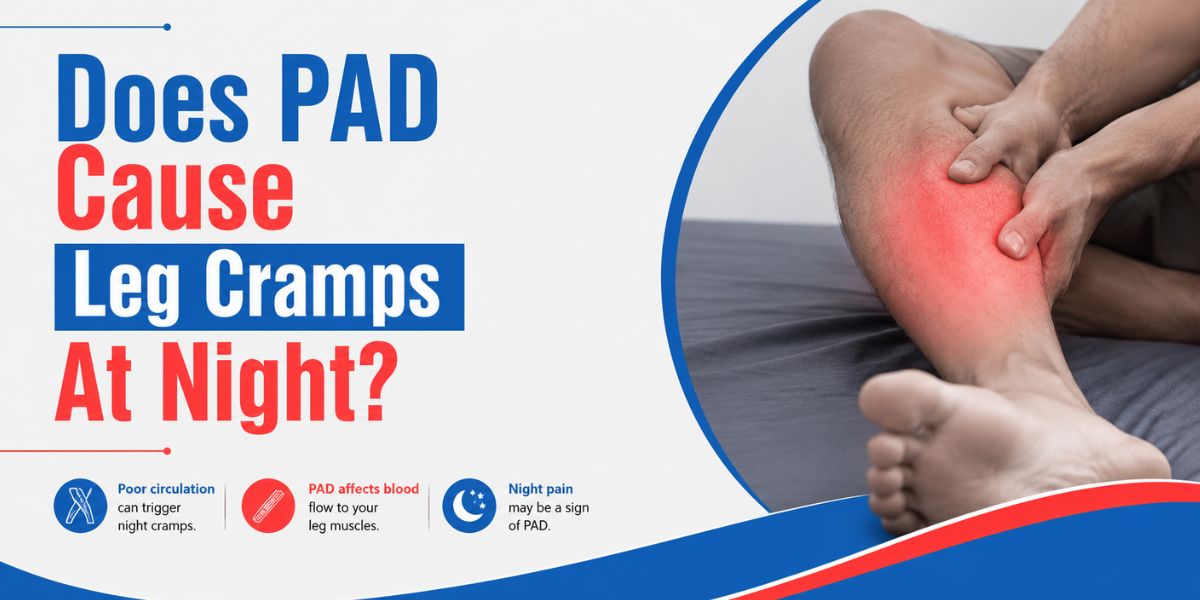
Yes, and it is one of the more overlooked warning signs in vascular medicine. When narrowed arteries cannot deliver enough oxygen to your calf and foot muscles, those muscles complain, and they complain loudest when you are lying flat and gravity is no longer helping blood reach your feet. Most people blame dehydration or a long day. Sometimes that is all it is. But when the pattern repeats, worsens, and comes with cold feet or slow-healing skin, peripheral artery disease deserves serious consideration.
Telling The Two Kinds Of Cramps Apart
Ordinary muscle cramps and vascular cramps feel similar at two in the morning. They behave very differently over weeks. This comparison is the fastest way to work out which one you are dealing with, and it is the first thing we check when a patient describes leg cramps while sleeping.
If the left column keeps describing your experience, night leg cramps and PAD are likely connected, and a fifteen-minute circulation test will settle the question.
Why PAD Wakes You Up At Night
The Circulation Behind The Pain
During the day, gravity helps push blood down toward your feet. Lying flat removes that assistance. In a healthy leg it makes no difference. In a leg affected by PAD, that small change is enough to tip oxygen supply below what resting muscle needs, and the muscle cramps in protest.
Why It Peaks Overnight
Blood pressure naturally dips during sleep, and cardiac output falls with it. Combine lower pressure with a narrowed vessel and flow drops further still. This is why PAD symptoms so often announce themselves in the small hours rather than in the middle of a busy afternoon, and why leg cramps while sleeping deserve more attention than they usually get.
When Cramping Signals Something Advanced
Cramping that arrives at rest, rather than only after exertion, suggests the disease has progressed. Pain in the toes or forefoot that wakes you and eases when you stand is called rest pain, and it ranks among the most serious PAD symptoms a patient can report. At that stage PAD disease is no longer a lifestyle conversation. It needs prompt assessment and, frequently, an interventional PAD treatment to restore flow before tissue is damaged.
Who Is Most Likely To Develop This
Peripheral artery disease does not arrive out of nowhere. It builds quietly over decades, and these are the factors that accelerate it.
Two or more of these together should lower your threshold for getting checked, particularly if PAD leg cramps at night have become a regular event.
What To Do About It
Early PAD treatment is far less invasive than late treatment. Medication, supervised walking programs, and risk-factor control resolve symptoms for most patients without any procedure at all.
Frequently Asked Questions
Does peripheral artery disease cause leg cramps at night in every patient?
No. Many people with narrowed arteries have no symptoms whatsoever, which is part of what makes the condition dangerous. Others notice cramping only after walking. Night cramping tends to appear as narrowing becomes more significant.
How do I know it is not just a magnesium deficiency?
You cannot know from the sensation alone. The distinguishing clues are the accompanying signs: cold feet, weak pulses, shiny skin, slow-healing cuts. A deficiency causes none of those. If any appear alongside your cramps, treat them as PAD symptoms until a test says otherwise.
Can PAD disease be reversed once it starts?
Plaque that has already formed does not disappear, but progression can be slowed dramatically and symptoms often resolve completely. Quitting smoking and walking regularly produce measurable improvement within months.
What test confirms whether PAD is the cause?
The ankle-brachial index is the standard first step, sometimes followed by a duplex ultrasound. Both are painless and non-invasive. Advanced Medical Group performs both in office, usually at the same visit as your consultation.
Will insurance cover the workup?
Diagnostic testing for symptomatic patients is routinely covered, and so is medically necessary PAD treatment. The team at Advanced Medical Group can verify your benefits before anything is scheduled.
Getting Your Circulation Checked
Cramps that keep returning are worth an answer rather than another night of guessing. If your legs wake you regularly, if one foot runs colder than the other, or if a cut on your foot is taking weeks to close, get evaluated for peripheral artery disease.
Our vascular team diagnoses and treats peripheral artery disease at four Hudson County locations: Jersey City, Union City, West New York, and North Bergen, with Saturday appointments and free insurance coverage checks. Call Advanced Medical Group at (201) 581-6120 or book online, and let Advanced Medical Group find out what is actually waking you up.