Varithena
FDA-approved prescription microfoam for varicose veins and Chronic Venous Insufficiency — ultrasound-guided, in-office, walk out the same day.
What Is Varithena?
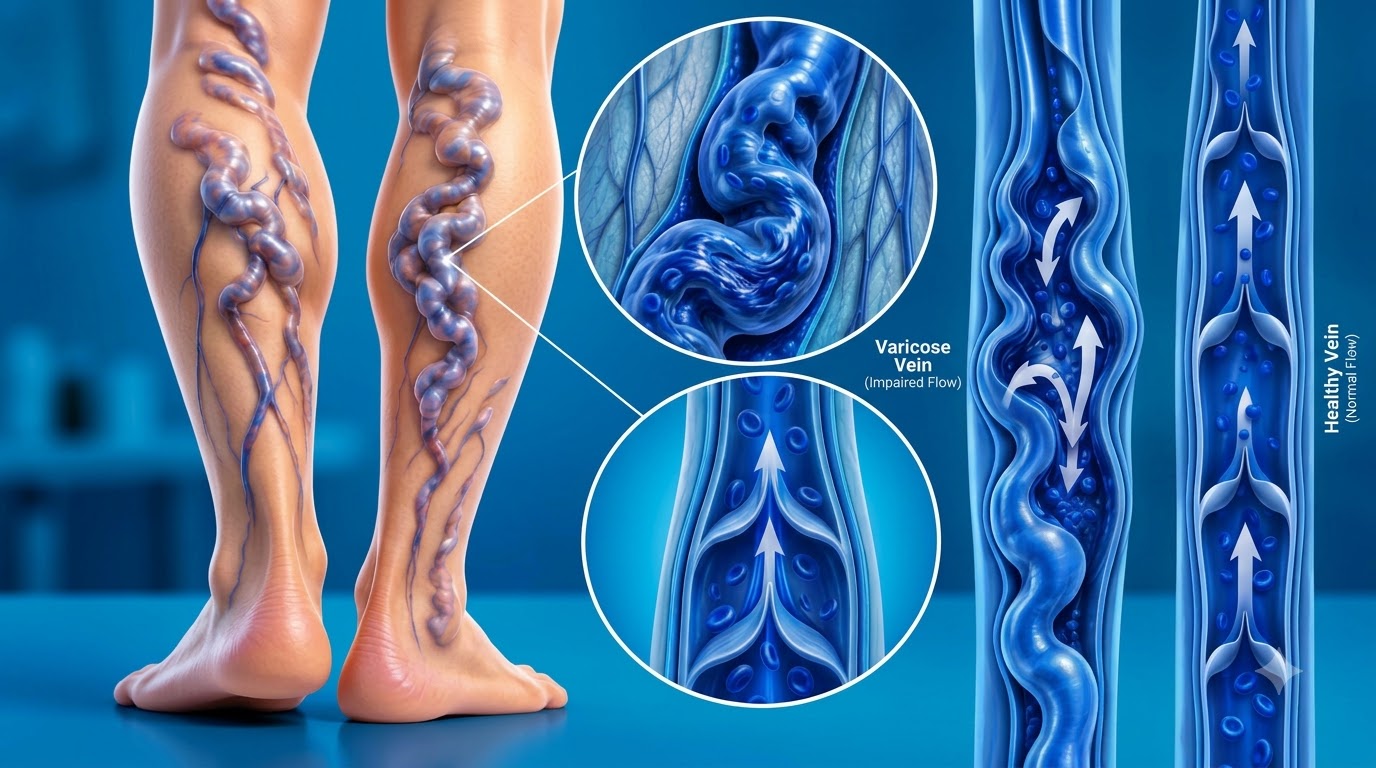
Varithena is an FDA-approved prescription microfoam — polidocanol injectable foam — used to treat varicose veins and Chronic Venous Insufficiency (CVI) caused by incompetent great saphenous vein (GSV) disease. It is injected under real-time ultrasound guidance directly into the affected vein, where the microfoam fills the vessel, displaces blood and causes the vein wall to spasm, collapse and seal permanently.
Unlike surgical stripping or thermal ablation, Varithena requires no heat, no general anesthesia and no large incision. It is highly effective for large, twisted and tortuous varicose veins not suitable for other treatments. Varithena is the only FDA-approved polidocanol microfoam for treating the incompetent great saphenous vein, accessory saphenous veins and visible varicosities above and below the knee. Available at all AMG locations — Jersey City · North Bergen · Union City · West New York.
Key Facts
Conditions Varithena Treats
Varicose Veins
Large, bulging, twisted varicose veins caused by incompetent great saphenous vein (GSV) disease. Varithena is most effective for this indication — closing the source vein and the visible disease together in one to two sessions.
Chronic Venous Insufficiency (CVI)
CVI caused by saphenous vein incompetence — persistent leg swelling, skin changes and venous hypertension. Varithena treats the root cause by permanently closing the incompetent vein driving the reflux.
Residual Veins Post-Sclerotherapy
When the underlying saphenous incompetence has not been addressed, surface sclerotherapy results are limited. Varithena closes the source vein — then sclerotherapy addresses remaining surface veins for complete clearance.
Symptoms
Large Bulging Varicose Veins
Large, twisted varicose veins caused by incompetent great saphenous vein (GSV) disease — the ideal Varithena indication.
Tortuous, Hard-to-Treat Veins
Twisted veins that are difficult to reach with catheter-based thermal treatments — the microfoam fills them regardless of shape.
Chronic Venous Insufficiency (CVI)
CVI driven by saphenous vein incompetence, with persistent leg swelling, skin changes and venous hypertension.
Leg Heaviness & Aching
Symptomatic venous insufficiency with heaviness, aching and swelling that improves once the source vein is closed.
Residual Veins Post-Sclerotherapy
When surface sclerotherapy alone has been limited because the underlying source vein was never addressed.
Preference for Non-Thermal Treatment
Patients who prefer a treatment that uses no heat and no large incision.
Treatment — Step by Step
Consultation & Duplex Ultrasound
Duplex ultrasound maps the great saphenous vein and identifies the incompetent segments to be treated. A personalized treatment plan is confirmed before booking the procedure.
Leg Prepared
The leg is cleaned and positioned. No tumescent or general anesthesia is required — a small amount of local anesthetic may be applied at the injection site only.
Microfoam Injected Under Ultrasound
Varithena microfoam is injected through one or two small punctures under real-time ultrasound guidance, ensuring accurate placement within the target incompetent vein segment.
Foam Displaces Blood & Seals Vein
The microfoam fills the incompetent vein, displacing blood and making maximum contact with the vein wall. The vein spasms, collapses and seals shut — cutting off the source of venous reflux.
Compression Applied & Walk Out
Compression bandaging and stockings are applied immediately. The patient walks out and is asked to walk for at least 10 minutes right away — walking is an essential part of the treatment protocol.
Vein Reabsorbed Over Weeks
Over 4–8 weeks the sealed vein is gradually reabsorbed. Varicose veins above the skin visibly shrink and fade. A follow-up ultrasound confirms complete closure at your next visit.
Recovery & Aftercare
Varithena recovery is straightforward — but compression and walking are essential for the best outcome.
Compression Stockings
Critical for optimal results. Worn continuously for the first 72 hours (including while sleeping), then during waking hours for 2 weeks.
- Class II (20–30 mmHg) knee-high stockings recommended
- Continuous wear for 72 hours — including while sleeping
- Daily during waking hours for 2 weeks after
- Longer compression may be advised for more extensive disease
Walking — Required
Walking immediately after Varithena is not just encouraged — it is a required part of the treatment protocol.
- Walk at least 10 minutes immediately after leaving the office
- 30 minutes of light walking daily for the first week
- Strenuous exercise, running or gym for 1 week
- Prolonged sitting or standing without movement
Sun, Heat & Bathing
Avoid the following for 2 weeks after treatment:
- Hot baths, jacuzzis or saunas
- Direct sunlight or sunbathing on the treated leg
- Swimming for at least 1 week
- Quick cool or lukewarm showers from day two onwards
Before You Come In
A little preparation makes your visit smooth and safe.
- Arrange a driver — you should not drive for the rest of the day
- Wear loose, comfortable clothing and bring your stockings
- Eat normally and take regular medications unless advised otherwise
- Plan to walk right after — bring comfortable shoes
Recovery Timeline
Mild bruising & tenderness
Some bruising and tenderness along the treated vein. Veins may look slightly more prominent at first — this is normal. Wear stockings continuously.
Bruising fades, vein firms up
Bruising resolves. The treated vein may feel firm or cord-like as it is reabsorbed. Wear stockings daily during waking hours.
Veins shrink & symptoms ease
Visible varicose veins shrink and fade significantly. Leg swelling, heaviness and aching improve. A follow-up ultrasound confirms the vein has closed.
Full results visible
Final results are visible. Any remaining surface veins can be cleared with a quick sclerotherapy (Asclera) session if needed.
Frequently Asked Questions
Regular sclerotherapy (Asclera) treats surface spider veins and small varicose veins by injection. Varithena is a prescription microfoam that treats the underlying incompetent great saphenous vein — the root cause of most varicose vein and CVI disease. Many patients benefit from both: Varithena to close the source vein, followed by sclerotherapy to clear remaining surface veins.
Most patients experience only mild discomfort during the small injection. The procedure requires no general anesthesia and no tumescent anesthesia — just a local anesthetic at the injection site. Mild bruising and tenderness afterward is normal and resolves within days.
Most patients achieve full closure of the incompetent vein in one to two Varithena sessions. After the GSV is closed, a follow-up sclerotherapy session addresses any remaining surface veins.
No — patients should arrange a driver for their Varithena appointment. You will be asked to walk for at least 10 minutes after the procedure and should not drive for the remainder of the day due to mild sedation effects in some patients.
Yes — when varicose veins or CVI cause documented symptoms such as pain, swelling or skin changes, Varithena treatment is generally covered by Medicare and most major commercial insurance plans. Our team verifies your coverage before your visit at no cost.
Yes — we provide care in English and Spanish at all locations. Se habla español.
Ready to take the next step?
Schedule a consultation at our North Bergen Vascular Procedure Center. Same-day appointments available.