Angioplasty & Stent Placement
Minimally invasive, catheter-based procedures that open blocked arteries and restore blood flow — in-office, walk out the same day.
What Is Angioplasty & Stent Placement?
Angioplasty and stent placement are minimally invasive, catheter-based procedures used to open narrowed or blocked arteries and restore healthy blood flow to the limbs. They are among the most effective and widely performed vascular interventions for patients with Peripheral Artery Disease (PAD).
Both procedures are performed together in our private North Bergen OBL by Dr. Merwin Richard, MD — without hospital admission, without general anesthesia, and with same-day discharge.
Key Facts
What Conditions Does This Treat?
Peripheral Artery Disease (PAD)
The most common indication. PAD causes narrowed leg arteries, leading to claudication (leg pain on walking), cold feet, skin changes and non-healing wounds.
Leg Claudication
Cramping and pain in the calves, thighs or hips that comes on during walking and goes away with rest — caused by insufficient blood reaching the leg muscles.
Critical Limb Ischemia
Severe PAD causing rest pain, non-healing foot ulcers or gangrene — a limb-threatening condition requiring urgent arterial intervention.
Arterial Stenosis
Significant narrowing of one or more peripheral arteries due to plaque buildup, reducing blood flow to the leg below safe levels.
How It Works
Access
A small nick is made in the skin — usually at the groin (femoral access) or foot (pedal access) — and a thin, flexible catheter is inserted into the artery. The area is numbed with local anesthesia and guided using real-time X-ray imaging (fluoroscopy).
Angioplasty
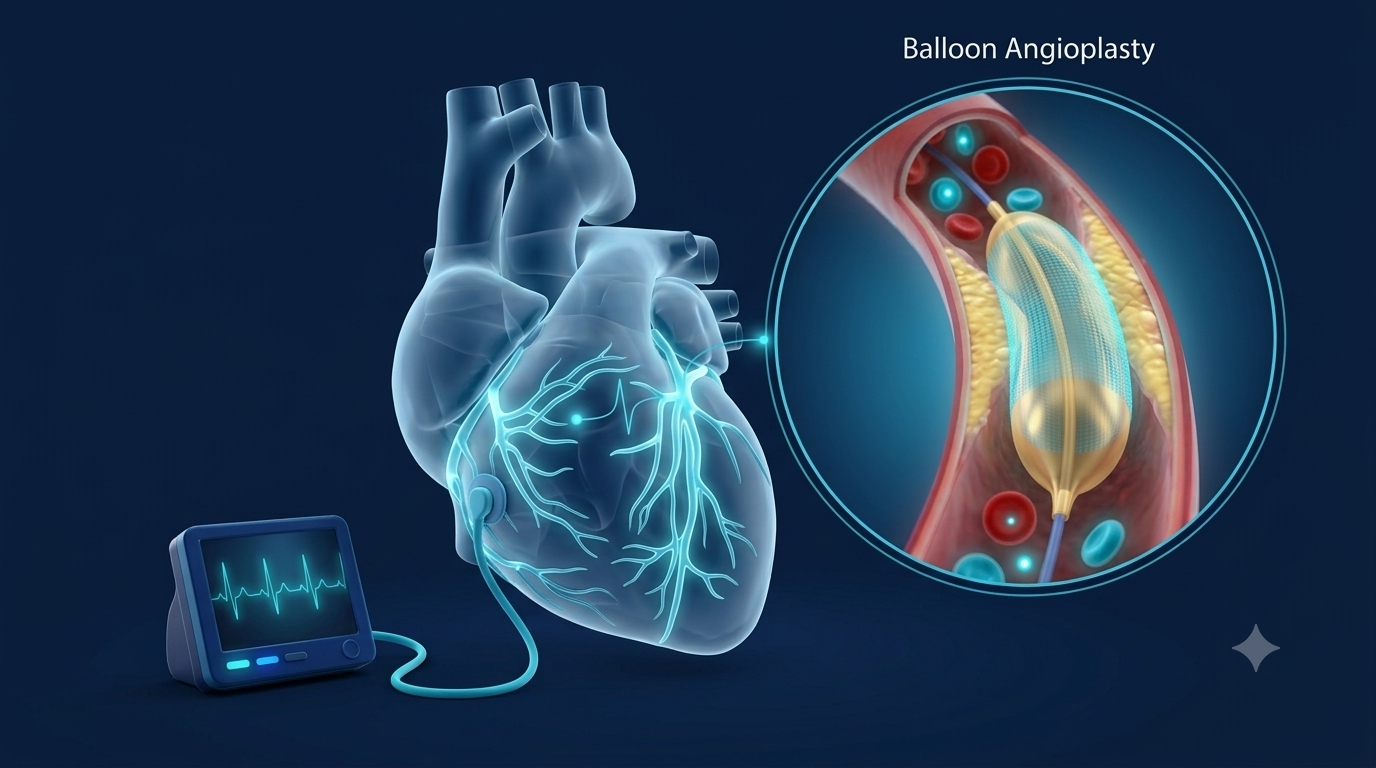
A tiny balloon at the tip of the catheter is advanced to the narrowed or blocked section of the artery and inflated. The balloon compresses the plaque against the arterial walls, widening the artery and restoring blood flow.
Stent Placement
In most cases, a small metal mesh tube (stent) is placed inside the artery at the site of the blockage to keep it open permanently and prevent the artery from narrowing again. The stent remains in the artery.
Catheter Removed
Once the stent is in place, the balloon is deflated and the catheter is removed. A small pressure dressing is applied to the access site — no stitches required.
Recovery & Home
The patient rests in our OBL for 1–2 hours while Dr. Richard confirms blood flow has been successfully restored. Most patients go home the same day.
Am I a Candidate?
Ideal For Patients Who Have
- Peripheral Artery Disease confirmed on imaging
- Leg pain, cramping or claudication limiting daily activity
- Non-healing wounds or ulcers on the feet or legs
- Cold or discolored feet indicating reduced circulation
- Failed or not responded to medication and lifestyle changes
Good to Know
- All procedures performed under local anesthesia with same-day discharge
- No hospital admission and no general anesthesia
- Covered by Medicare and most major commercial plans
What to Expect at Our Vascular Procedure Center
Consultation & Imaging
Dr. Richard reviews your imaging and symptoms to confirm the location and severity of arterial blockages and plan the procedure.
Angioplasty
A balloon catheter opens the narrowed artery, compressing plaque against the walls to restore blood flow.
Stent Placement
A metal mesh stent is placed to keep the artery open permanently and prevent re-narrowing.
Recovery
Short monitored rest in our OBL. Most patients go home within 1–2 hours the same day.
Follow-Up
Regular follow-up monitors stent function and overall arterial health, with ongoing lifestyle guidance.
Frequently Asked Questions
Coronary angioplasty opens arteries to the heart. Peripheral angioplasty — performed at our OBL — opens arteries in the legs and limbs. The technique is similar but the target arteries are different.
Stents are permanent implants designed to keep the artery open long-term. Regular follow-up with Dr. Richard monitors stent function and overall arterial health.
Some patients with multiple blockages may require more than one session. Dr. Richard discusses the treatment plan at your consultation based on your imaging results.
No. The procedure is performed entirely in our private North Bergen OBL. No hospital admission, no overnight stay, and same-day return home.
Yes — angioplasty and stent placement are covered by Medicare and most major commercial plans. Our team verifies coverage before your visit at no cost.
Yes — we provide care in English and Spanish. Se habla español.
Ready to take the next step?
Schedule a consultation at our North Bergen Vascular Procedure Center. Same-day appointments available.