Diagnostic Angiogram
Minimally invasive imaging that maps your arteries — pinpointing blockages precisely, right in our office.
What Is a Diagnostic Angiogram?
A diagnostic angiogram is a minimally invasive imaging procedure that uses contrast dye and real-time X-ray fluoroscopy to create a detailed, precise map of the arteries — revealing the exact location, number and severity of arterial blockages or abnormalities.
It is typically the first step in evaluating patients with suspected Peripheral Artery Disease (PAD) or other vascular conditions, and is often performed immediately before a therapeutic intervention such as angioplasty or stent placement. The entire procedure is performed in our private North Bergen Vascular Procedure Center by Dr. Merwin Richard, MD.
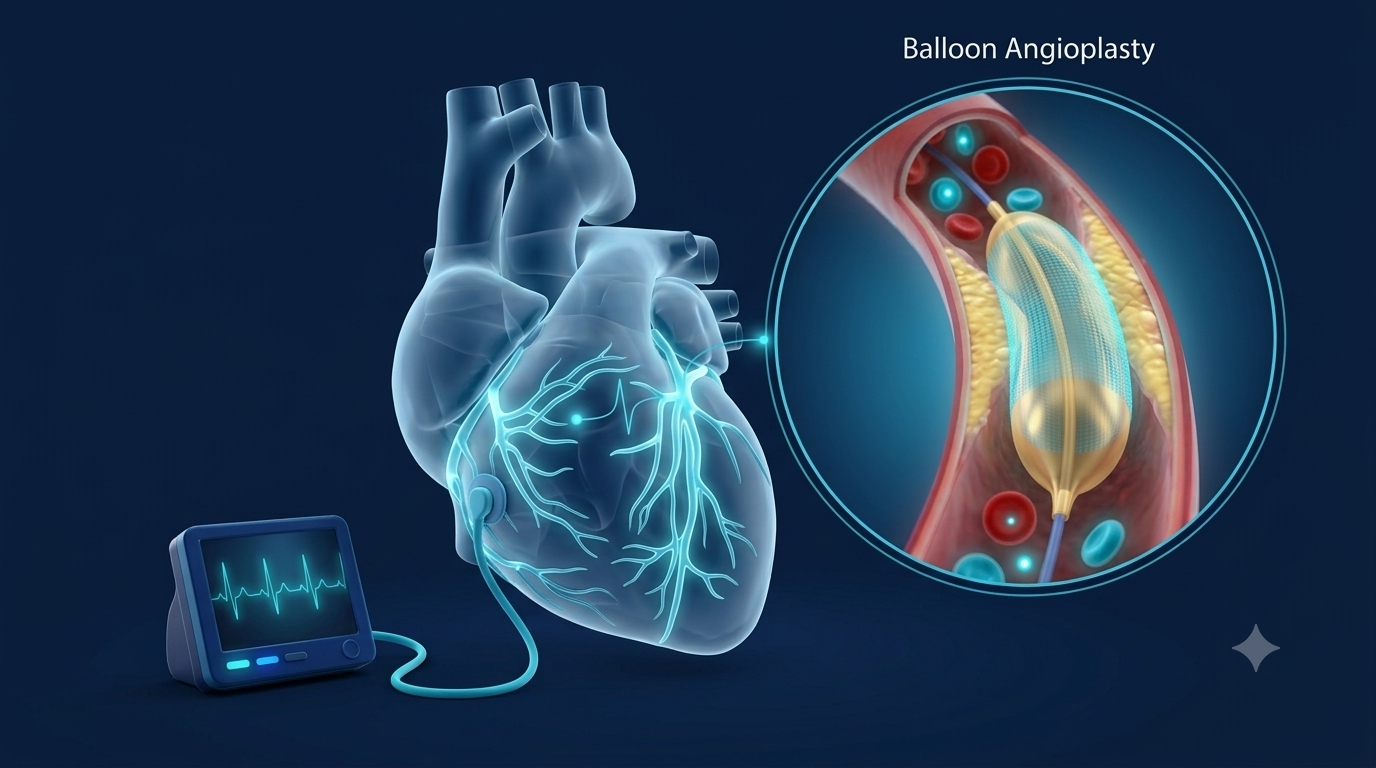
Key Facts
Conditions Diagnostic Angiogram Treats
Detailed Arterial Mapping
When suspected PAD needs precise mapping — after ABI testing, vascular ultrasound or symptoms suggest significant arterial disease.
Before Treatment
The essential first step to confirm the exact location and extent of blockages before angioplasty or stent placement.
Wounds & Leg Pain
To find the arterial cause of non-healing wounds or ulcers, and to investigate unexplained leg pain or claudication.
When Is a Diagnostic Angiogram Ordered?
Suspected PAD
When ABI testing, vascular ultrasound or clinical symptoms suggest significant peripheral artery disease requiring detailed mapping before intervention.
Before Angioplasty or Stent
As the essential first step to confirm the location and extent of blockages before balloon or stent treatment is performed.
Non-Healing Wounds
To identify the arterial cause of wounds or ulcers that are not healing — particularly in diabetic patients with suspected vascular disease.
Unexplained Leg Pain
When claudication or rest pain suggests significant arterial narrowing that non-invasive tests have not fully characterized.
Pre-Surgical Planning
To map the vascular anatomy in detail before surgical bypass or other planned interventions.
How a Diagnostic Angiogram Works
Preparation
The patient lies on the procedure table in our Vascular Procedure Center. The access site — usually the groin (femoral) or foot (pedal) — is cleaned and numbed with local anesthesia.
Catheter Inserted
A thin, flexible catheter is inserted into the artery through a small puncture and guided through the vascular system toward the area being evaluated, using real-time X-ray imaging.
Contrast Dye
A small amount of contrast dye is injected through the catheter into the artery. The dye makes the blood vessels clearly visible on the X-ray fluoroscopy screen in real time.
Images Captured
High-resolution images of the arteries are captured from multiple angles — showing the exact location of narrowing, blockages, aneurysms or other abnormalities.
Findings & Next Steps
Dr. Richard reviews the images immediately. If a blockage is found and the patient is suitable, angioplasty and/or stent placement may be performed in the same session without a second visit.
Am I a Candidate?
Ideal For Patients Who Have
- Symptoms of PAD not fully explained by non-invasive testing
- Been recommended for angioplasty or stent placement
- Non-healing wounds or ulcers with suspected vascular cause
- Significant leg pain or claudication requiring precise diagnosis
- A need for detailed arterial mapping before surgical planning
Requires Evaluation First
- Severe kidney impairment (requires evaluation first)
- Known contrast dye or iodine allergy (requires evaluation first)
- Pregnancy
What to Expect at Our Vascular Procedure Center
Consultation
Dr. Richard reviews your symptoms, ABI/ultrasound results, kidney function and medical history to confirm you are a candidate.
Preparation
Fasting for 4–6 hours beforehand as instructed. Access site cleaned and numbed with local anesthesia only.
The Procedure
30–60 minutes in our Vascular Procedure Center. Catheter guided under X-ray, contrast dye injected, arteries mapped from multiple angles.
Same-Session Treatment
If a blockage is found and you are suitable, angioplasty and/or a stent can be placed in the same session — no second visit.
Recovery
Short monitored rest. Most patients go home within 1–2 hours the same day.
Frequently Asked Questions
No. The procedure is performed under local anesthesia. Patients may feel pressure when the catheter is positioned and a warm sensation when contrast dye is injected — both are brief and well tolerated.
Yes — in most cases. If a blockage is found and the patient is a suitable candidate, Dr. Richard can perform angioplasty and stent placement in the same session without rescheduling.
Contrast dye is generally safe for most patients. Patients with kidney disease or contrast allergy require evaluation before the procedure. Dr. Richard reviews your kidney function and medical history at your consultation.
Yes — patients are typically asked to avoid food and drink for 4–6 hours before the procedure. Specific instructions are provided at your consultation.
No. The diagnostic angiogram is an outpatient procedure performed in our private Vascular Procedure Center. Most patients go home within 1–2 hours.
Yes — diagnostic angiogram is covered by Medicare and most major commercial plans when medically indicated. Our team verifies your coverage before your visit.
Yes — we provide care in English and Spanish. Se habla español.
Ready to take the next step?
Schedule a consultation at our North Bergen Vascular Procedure Center. Same-day appointments available.