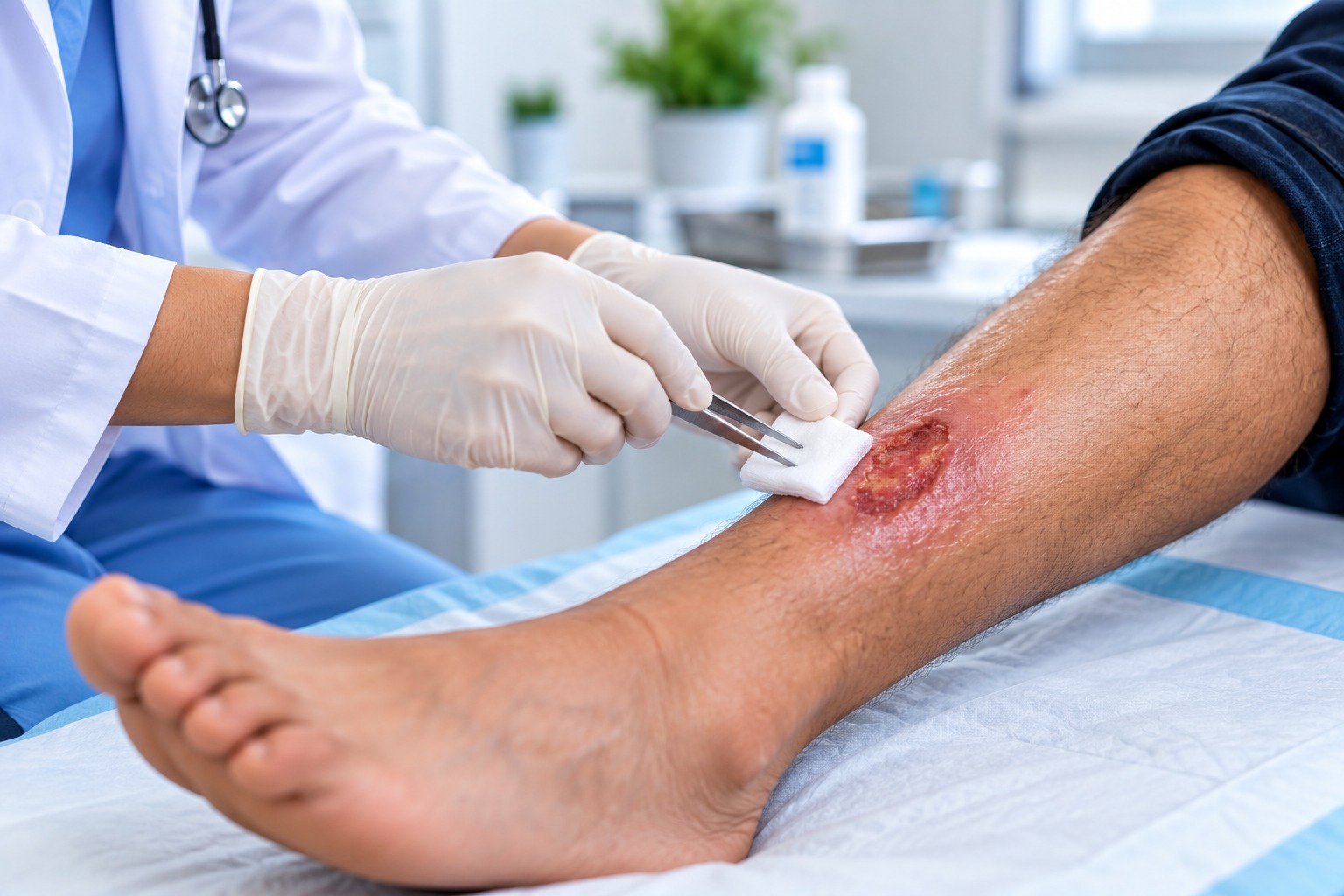
Non-Healing Wound Assessment
Vascular evaluation of chronic wounds — identifying and treating the arterial or venous cause in coordination with our podiatry team.
What Are Non-Healing Wounds?
A non-healing wound is any sore, ulcer or cut — most often on the feet or legs — that fails to heal within the expected timeframe, usually a few weeks. Chronic wounds are frequently a sign of an underlying circulation problem: either poor arterial blood flow (from PAD) or venous disease (from Chronic Venous Insufficiency).
Because the root cause is usually vascular, treating the wound alone is rarely enough. At Advanced Medical Group, Dr. Merwin Richard identifies and treats the arterial or venous cause of the wound — working alongside our podiatry team to promote healing and preserve the limb.
Key Facts
How We Assess Non-Healing Wounds
Wound & Vascular Evaluation
Dr. Richard examines the wound and assesses circulation, checking pulses and skin condition in the affected limb.
ABI & Ultrasound
Non-invasive ABI testing and duplex ultrasound identify whether poor arterial flow or venous disease is preventing healing.
Treat the Root Cause
If a blockage or venous reflux is found, it is treated — for example with angioplasty, stenting or vein treatment — to restore healthy blood flow.
Coordinated Wound Care
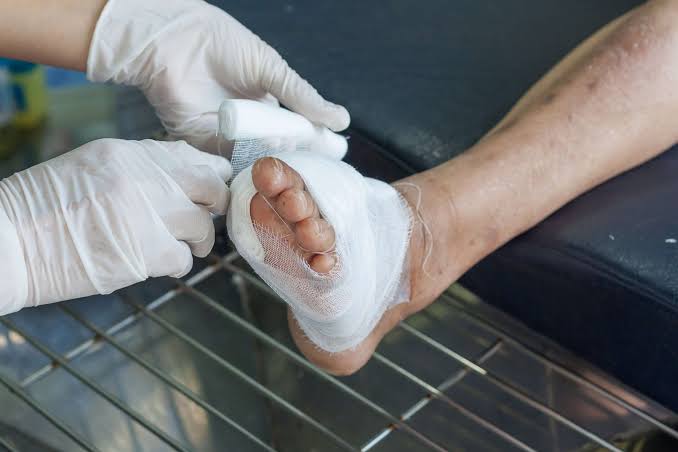
Ongoing wound care is coordinated with our podiatry team to promote healing and prevent recurrence.
When to Seek a Wound Assessment
Wounds That Won’t Heal
A cut, sore or ulcer on the foot or leg that has not healed within a few weeks despite basic care.
Recurring Ulcers
Wounds that repeatedly return in the same area — often a sign of ongoing venous or arterial disease.
Ankle & Lower-Leg Ulcers
Open sores near the ankle, commonly associated with Chronic Venous Insufficiency.
Wounds With Poor Circulation
Sores on cold, pale or discolored feet — a sign the wound may be caused by reduced arterial flow.
Signs of Infection
Increasing redness, warmth, swelling, odor or drainage around a wound requires prompt evaluation.
Diabetic Foot Wounds
Any foot wound in a patient with diabetes should be assessed early to prevent serious complications.
What to Expect at Our Vascular Procedure Center
Wound Evaluation
Dr. Richard examines the wound and assesses circulation in the affected limb.
Vascular Testing
ABI and duplex ultrasound identify the arterial or venous cause preventing healing.
Treat the Cause
The underlying blockage or venous reflux is treated to restore healthy blood flow.
Coordinated Care
Wound management is coordinated with our podiatry team to promote healing.
Follow-Up
Ongoing monitoring to ensure the wound heals and does not recur.
Frequently Asked Questions
Most chronic wounds fail to heal because of an underlying circulation problem — either poor arterial blood flow (PAD) or venous disease (CVI). Treating the wound alone rarely works; the vascular cause must be addressed.
With a vascular evaluation including non-invasive ABI testing and duplex ultrasound, performed in our office to determine whether the cause is arterial or venous.
Yes. Restoring healthy blood flow — for example with angioplasty, stenting or vein treatment — is often the key to healing a chronic wound and preventing recurrence.
Yes. Wound care is coordinated between Dr. Richard and our podiatry team so that both the vascular cause and the wound itself are treated.
Yes — vascular evaluation and treatment for non-healing wounds are covered by Medicare and most major commercial plans when medically indicated. Our team verifies coverage before your visit.
Ready to take the next step?
Schedule a consultation at our North Bergen Vascular Procedure Center. Same-day appointments available.