Sclerotherapy
The gold standard injection treatment for spider and varicose veins using Polidocanol (Asclera) — in-office, no surgery, walk out the same day.
What Is Sclerotherapy?
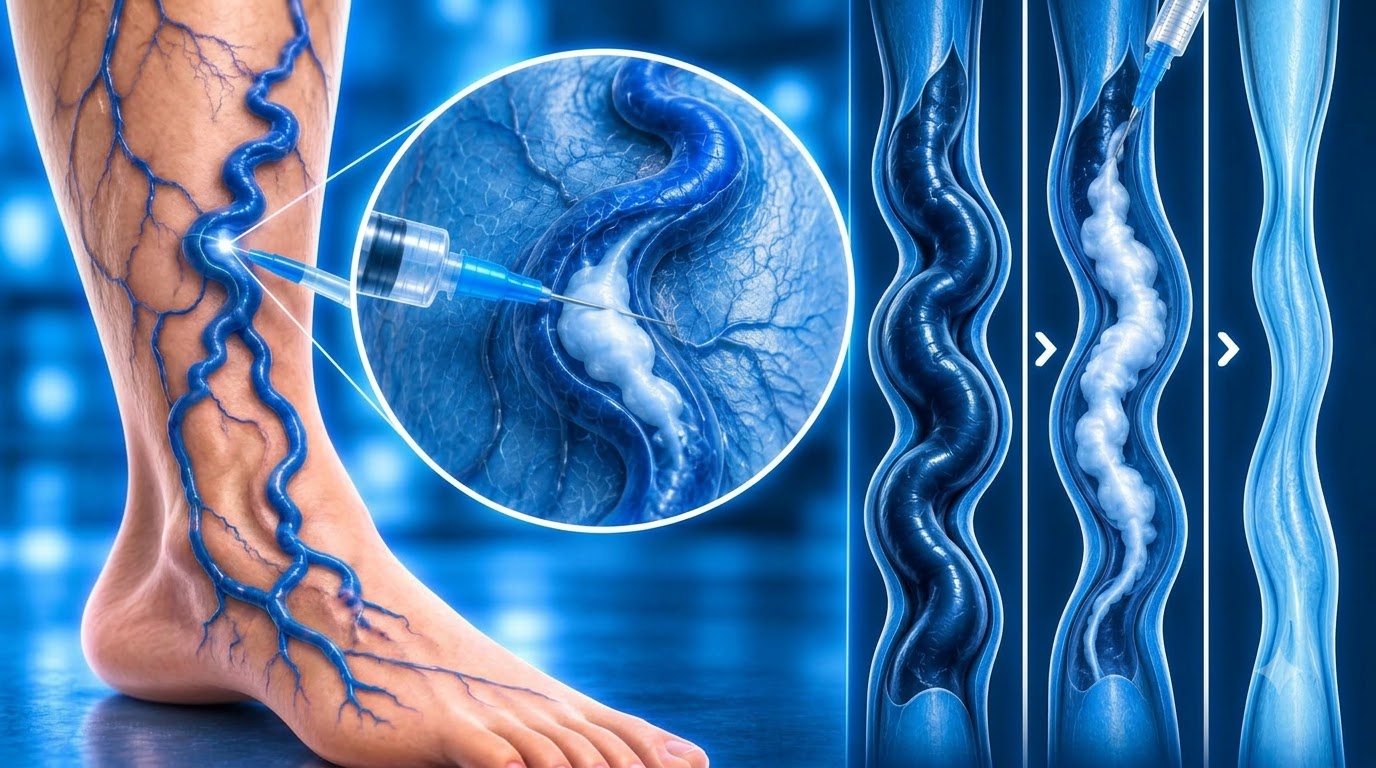
Sclerotherapy is the most widely used and clinically proven treatment for spider veins and small to medium varicose veins. At Advanced Medical Group we use Polidocanol (Asclera) — an FDA-approved sclerosing agent injected directly into the affected vein using a very fine needle. Polidocanol irritates the vein wall, causing it to collapse, seal shut and gradually fade as the body reabsorbs it over the following weeks.
Available at multiple AMG locations across Hudson County — no hospital, no general anesthesia, no downtime. Polidocanol works by damaging the inner lining of the vein wall, causing it to collapse and seal, with minimal discomfort at the injection site compared to older sclerosants.
Key Facts
Who Sclerotherapy Treats
Spider & Small Varicose Veins
Ideal for visible spider veins and small to medium varicose veins on the legs, thighs, ankles and feet — treating clusters and their reticular feeder veins together.
Ultrasound-Checked First
A duplex ultrasound checks for any underlying venous reflux before treatment, so the right source of the problem is addressed — not just the surface veins.
Combined With Varithena
When a deeper incompetent vein is driving surface veins, that source is treated first (often with Varithena) and sclerotherapy then clears the remaining surface veins for complete results.
Symptoms
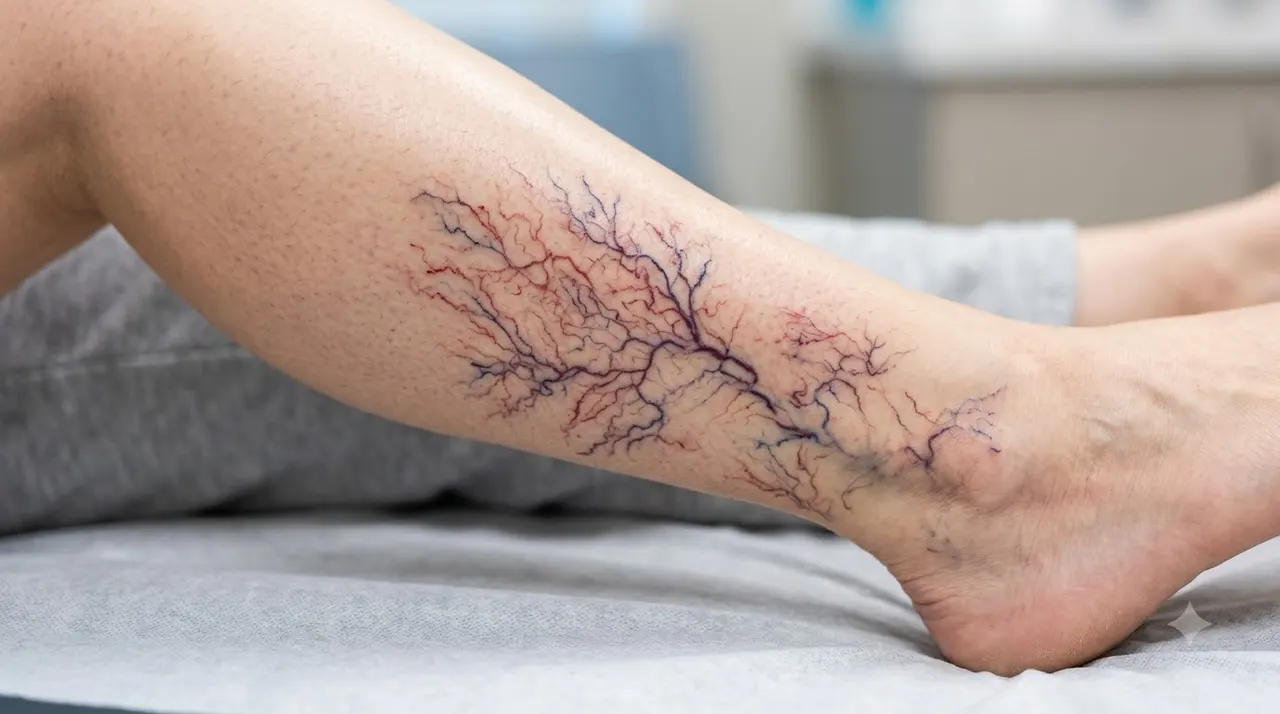
Visible Spider Veins
Red, blue or purple web-like clusters on the legs, ankles and thighs that sclerotherapy collapses and fades.
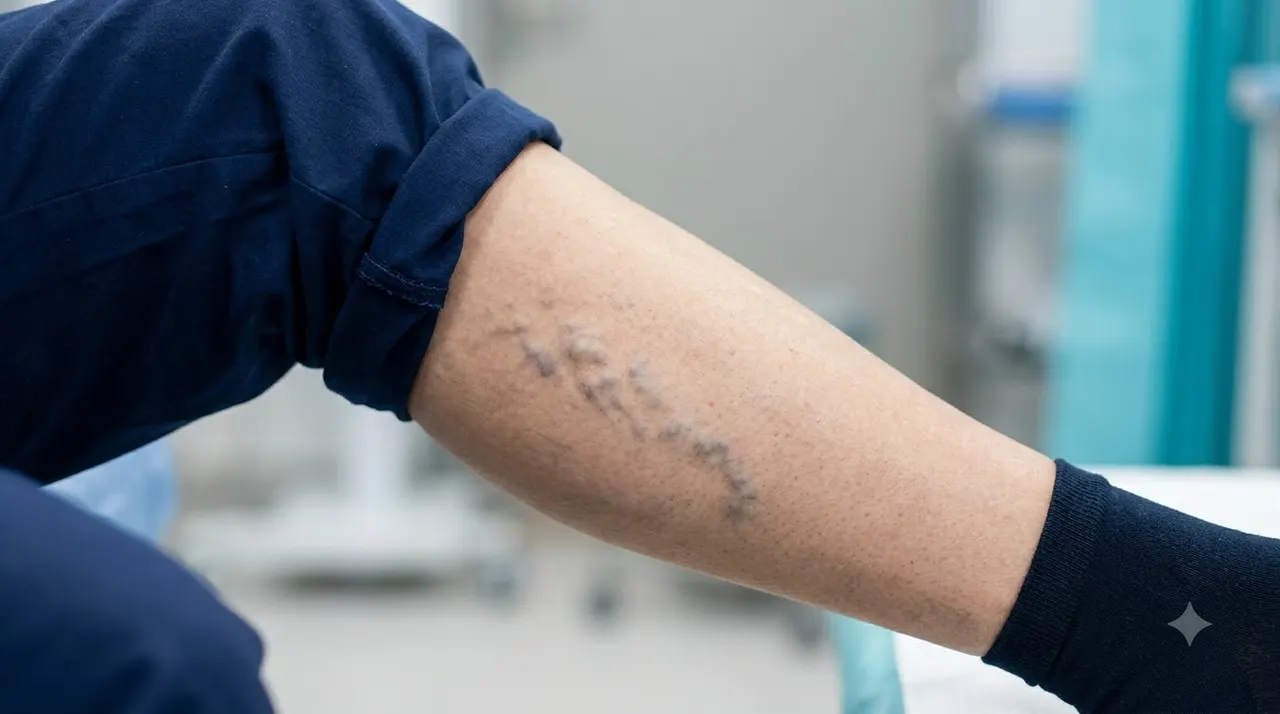
Small to Medium Varicose Veins
Smaller bulging varicose veins that respond well to direct Polidocanol (Asclera) injection.
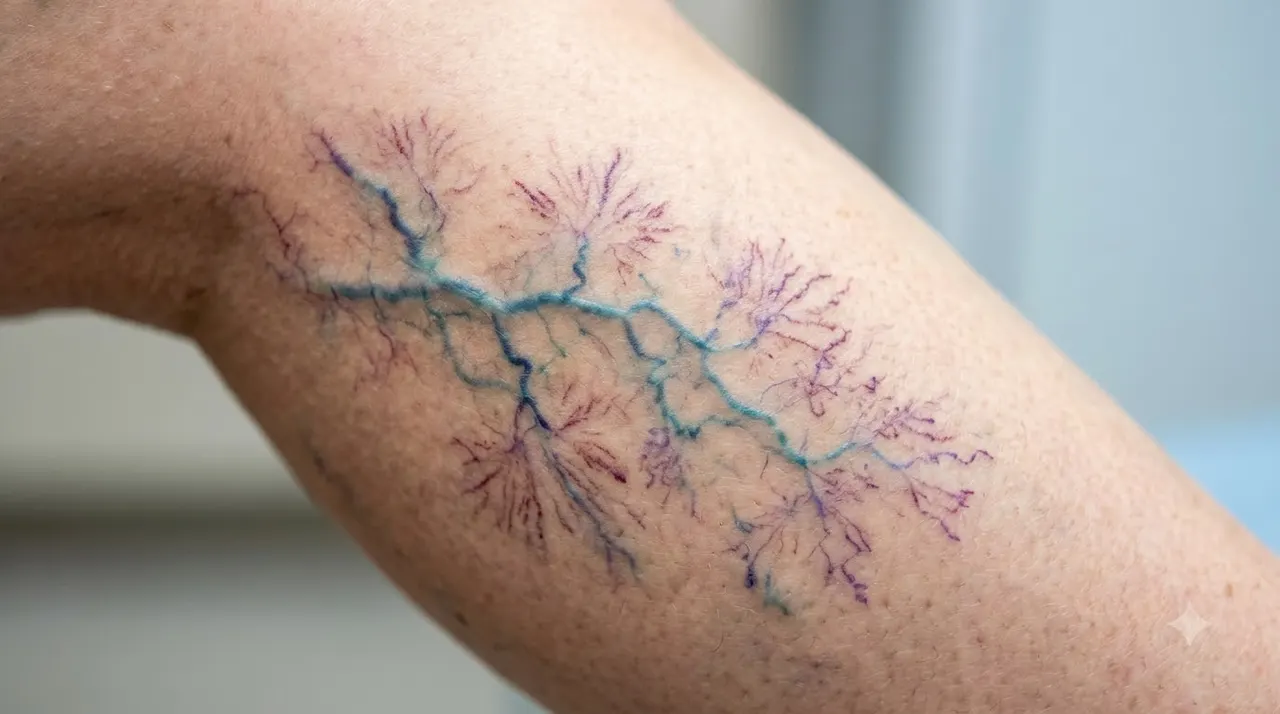
Reticular Feeder Veins
The slightly larger bluish veins that feed spider vein clusters — treated together in the same session.

Aching & Heaviness
Aching, heaviness or burning around visible veins, particularly after prolonged standing.

Cosmetic Concerns
Visible surface veins on the legs and face that patients want cleared for cosmetic reasons.
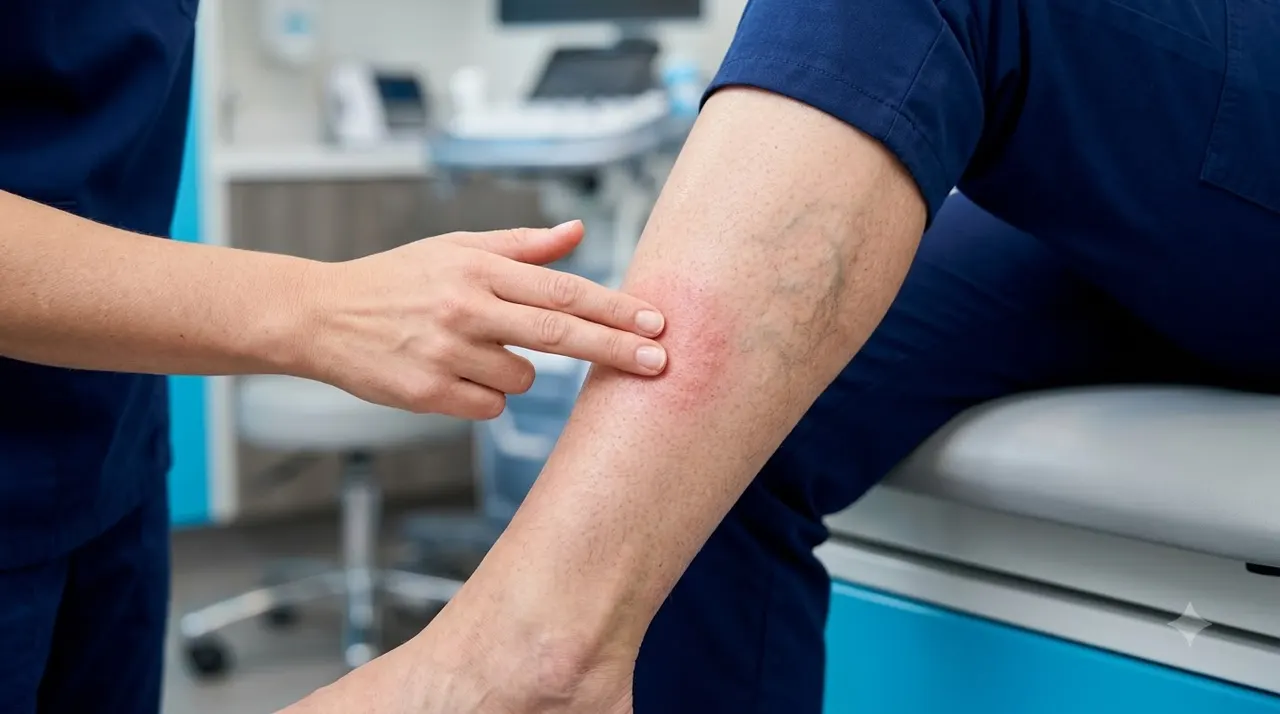
Burning Around Veins
A burning or irritated sensation directly over the affected surface veins.
Treatment — Step by Step
Consultation & Vein Mapping
Provider examines the veins and performs duplex ultrasound to identify any underlying venous reflux before treatment. A personalized plan is agreed.
Skin Preparation
The treatment area is cleaned with antiseptic. No anesthesia is needed — the Asclera needles are very fine and the procedure is comfortable from start to finish.
Polidocanol (Asclera) Injected
A small amount of Polidocanol (Asclera) is injected into each target vein. The solution irritates the inner wall, causing it to swell, collapse and seal shut. Multiple veins are treated per session.
Compression Applied
Compression pads are placed over treated areas and stockings applied immediately — keeping collapsed vein walls pressed together for the best result.
Walk Out Same Day
You walk out immediately. Light walking is actively encouraged right away. The entire in-office visit — including preparation and injections — takes 30–45 minutes.
Veins Gradually Fade
Over 3–6 weeks the veins darken slightly then fade as the body absorbs them. Additional sessions address remaining veins until full clearance.
Recovery & Aftercare
Following aftercare instructions carefully makes a significant difference to your results.
Compression Stockings
The single most important part of recovery. Must be worn continuously for the first 48 hours — including while sleeping — then during waking hours for 1–2 weeks.
- Class II (20–30 mmHg) compression recommended
- Continuous for 48 hours after treatment
- Daily during waking hours for 1–2 weeks
- Significantly improves Asclera treatment results
Activity & Exercise
Light walking encouraged immediately. Avoid the following for 48–72 hours:
- High-impact exercise — running, gym, cycling
- Swimming or soaking in water
- Prolonged standing without movement
- Light walking — encouraged from day one
Sun, Heat & Hot Water
Avoid for 2 weeks after treatment:
- Hot baths, saunas or steam rooms
- Direct sunlight on treated areas
- Sunbathing or tanning beds
- Cool or lukewarm showers fine from day one
Recovery Timeline
Mild bruising & redness
Mild bruising and redness at injection sites. Treated veins may appear darker — normal and expected with Asclera.
Bruising fades
Bruising fades. Veins may feel firm under the skin as they are absorbed. Stockings worn daily.
Veins visibly fade
Veins begin to visibly fade. A follow-up session is scheduled for remaining veins if needed.
Full results visible
Full results visible. Final provider assessment confirms clearance.
Frequently Asked Questions
We use Polidocanol (Asclera) — an FDA-approved sclerosing agent that is well tolerated, minimally painful at the injection site and highly effective at collapsing spider veins and small varicose veins.
Polidocanol (Asclera) is known for causing less discomfort than older sclerosants. Most patients feel only a brief mild stinging at injection sites. No anesthesia is required.
Spider veins typically clear in 1–3 sessions. Larger veins may need more. Sessions are spaced 4–6 weeks apart to allow full assessment between treatments.
Yes — most patients return to work and daily activities immediately. Avoid strenuous exercise, swimming and hot baths for 48–72 hours.
Treated veins are permanently eliminated. New veins can develop over time but the treated vessels do not return.
Spider vein treatment is generally cosmetic. When varicose veins cause symptoms such as pain or swelling, coverage may apply. Our team verifies coverage at no cost before your visit.
Ready to take the next step?
Schedule a consultation at our North Bergen Vascular Procedure Center. Same-day appointments available.