Spider Veins
Small red, blue and purple clusters of veins just beneath the skin — common, treatable and permanently eliminated in-office with no surgery.
What Are Spider Veins?
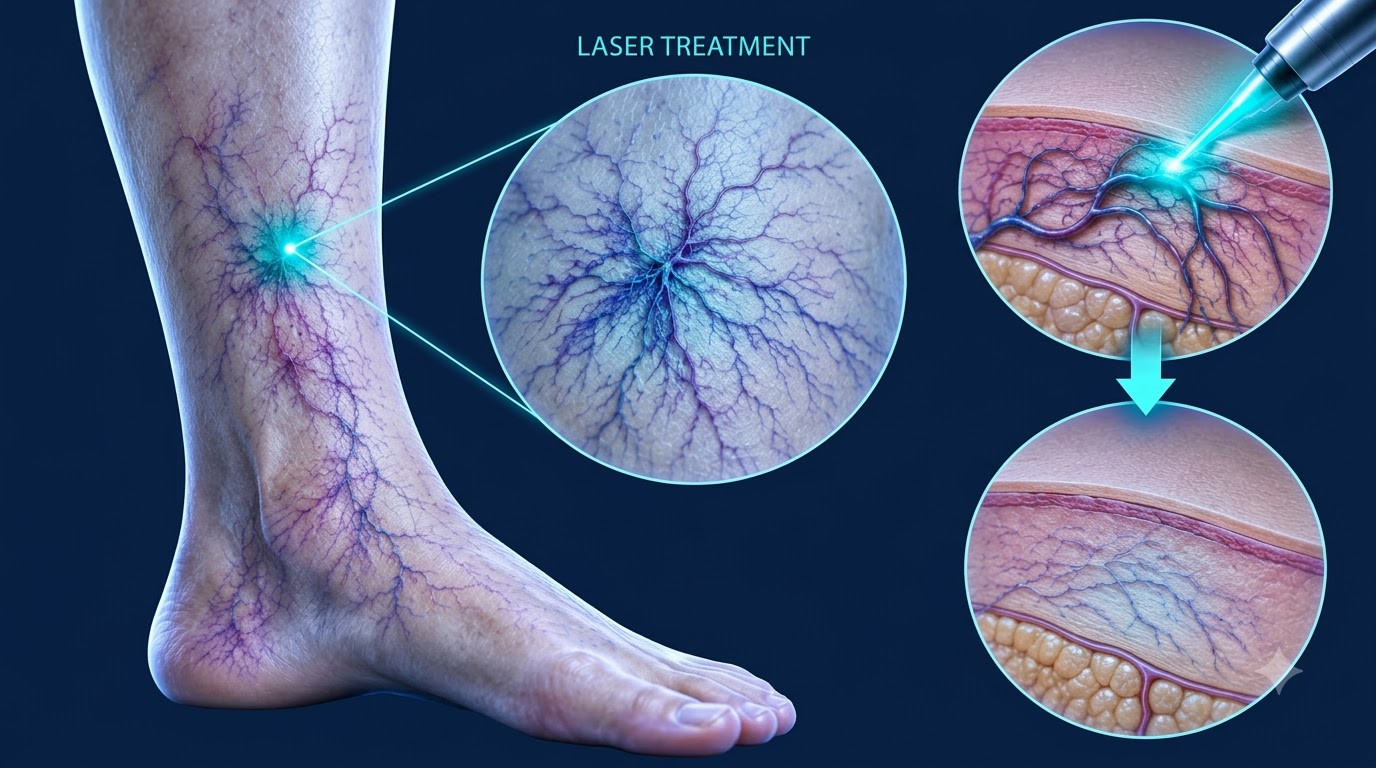
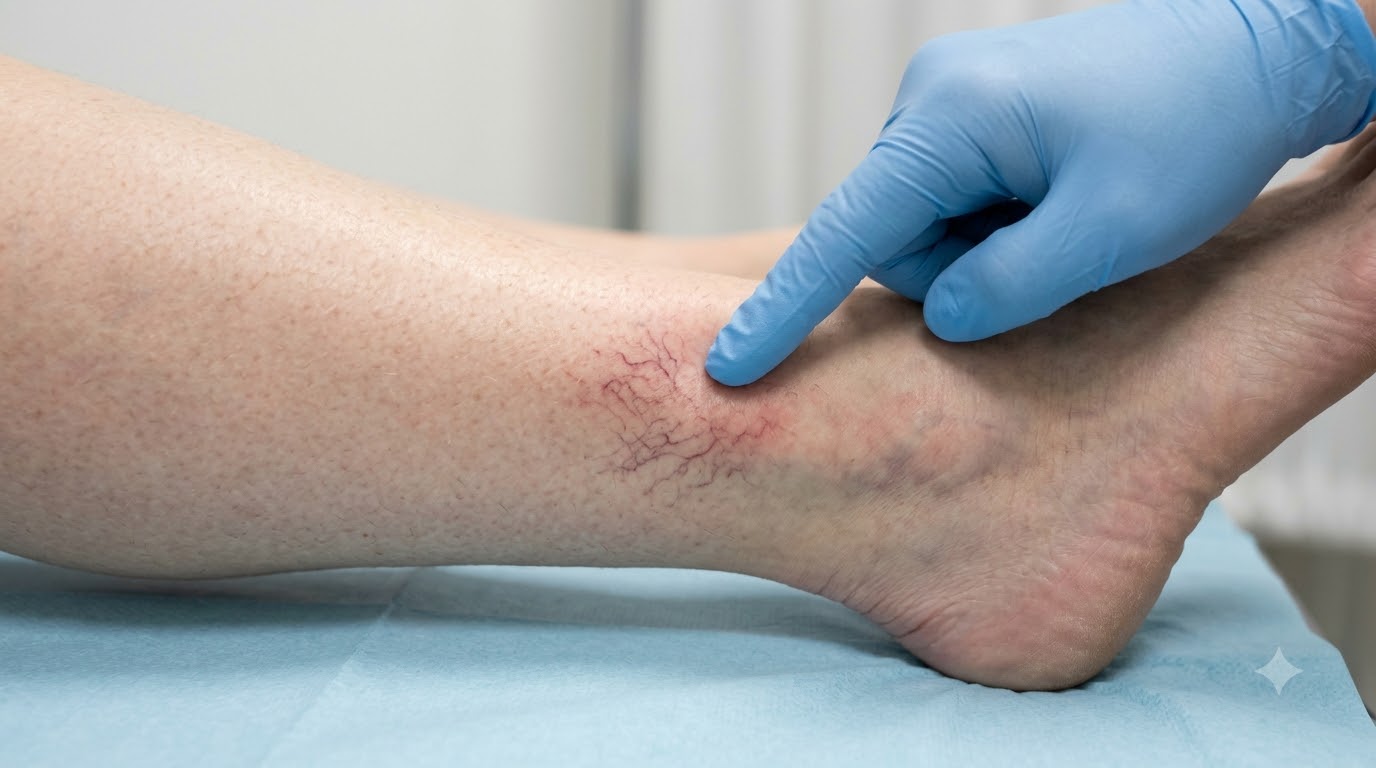
Spider veins — medically known as telangiectasias — are small, dilated blood vessels that appear just beneath the surface of the skin as red, blue or purple web-like clusters. They most commonly appear on the legs, thighs, ankles and face and develop when vein walls weaken and small vessels expand.
While often thought of as purely cosmetic, spider veins can cause aching, burning and itching — and may indicate underlying venous reflux that should be evaluated. At Advanced Medical Group they are easily and permanently treated in-office across all our locations.
Key Facts
Symptoms
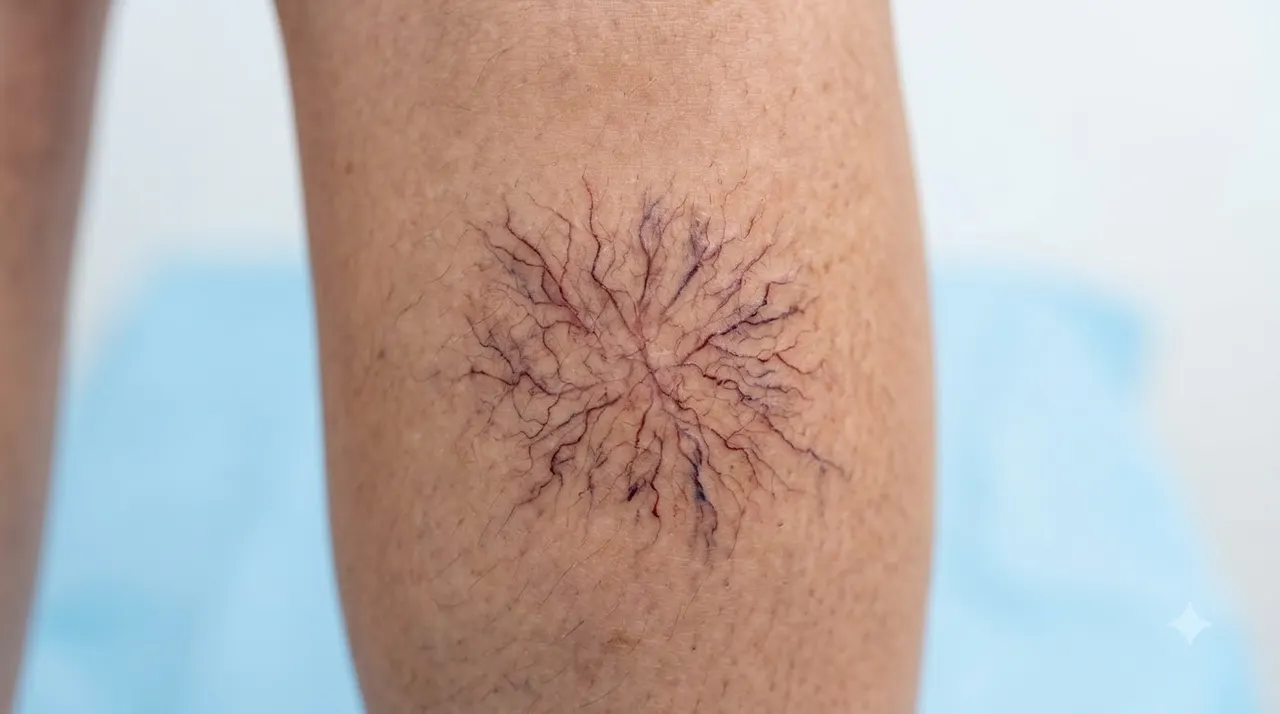
Visible Web-Like Veins
Red, blue or purple clusters of tiny vessels just beneath the skin — most common on the inner thighs, calves, ankles and face. May appear as thin lines, branches or a starburst pattern.
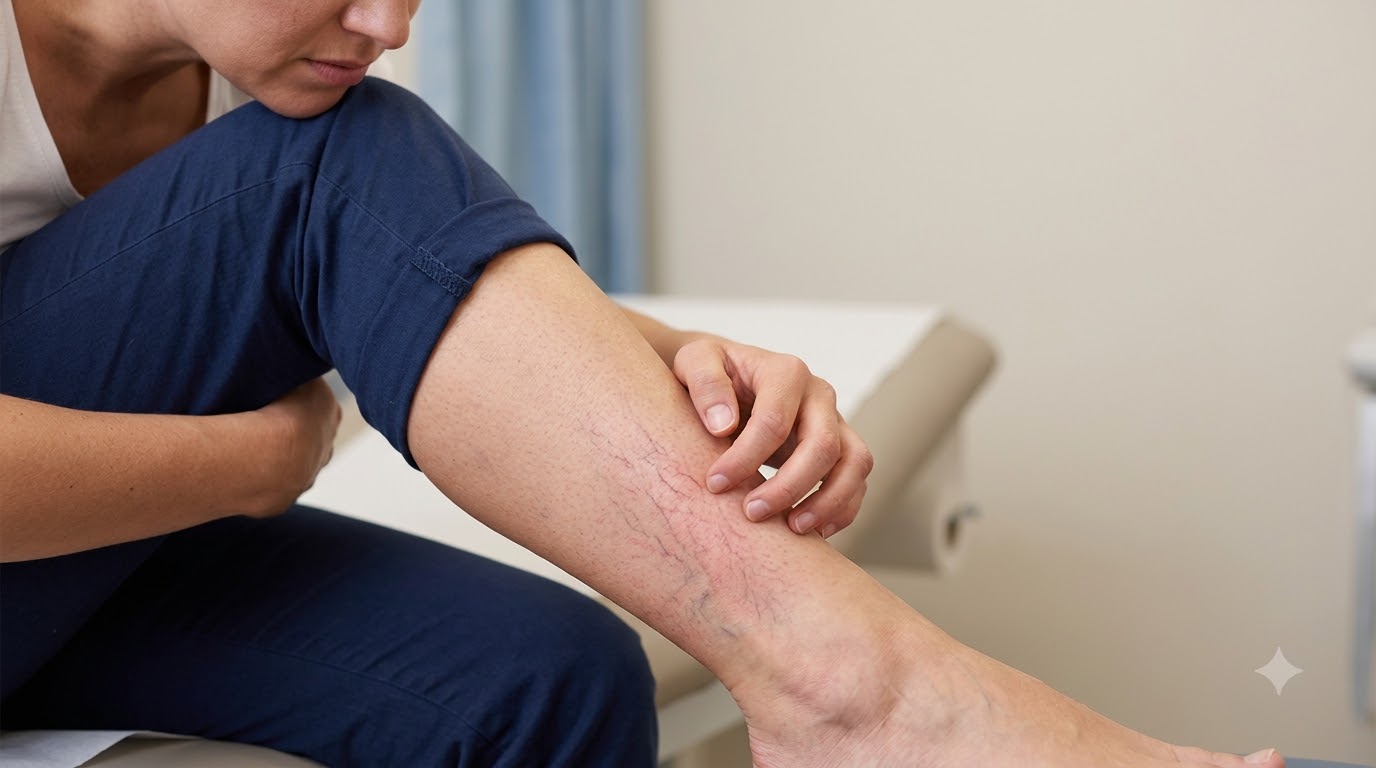
Burning or Itching
A persistent burning, itching or tingling sensation directly over the affected veins — particularly after prolonged standing or at the end of the day.

Aching & Heaviness
Mild aching or a feeling of heaviness in the legs, especially after long periods on your feet. Often dismissed as tiredness but can indicate underlying venous pressure.
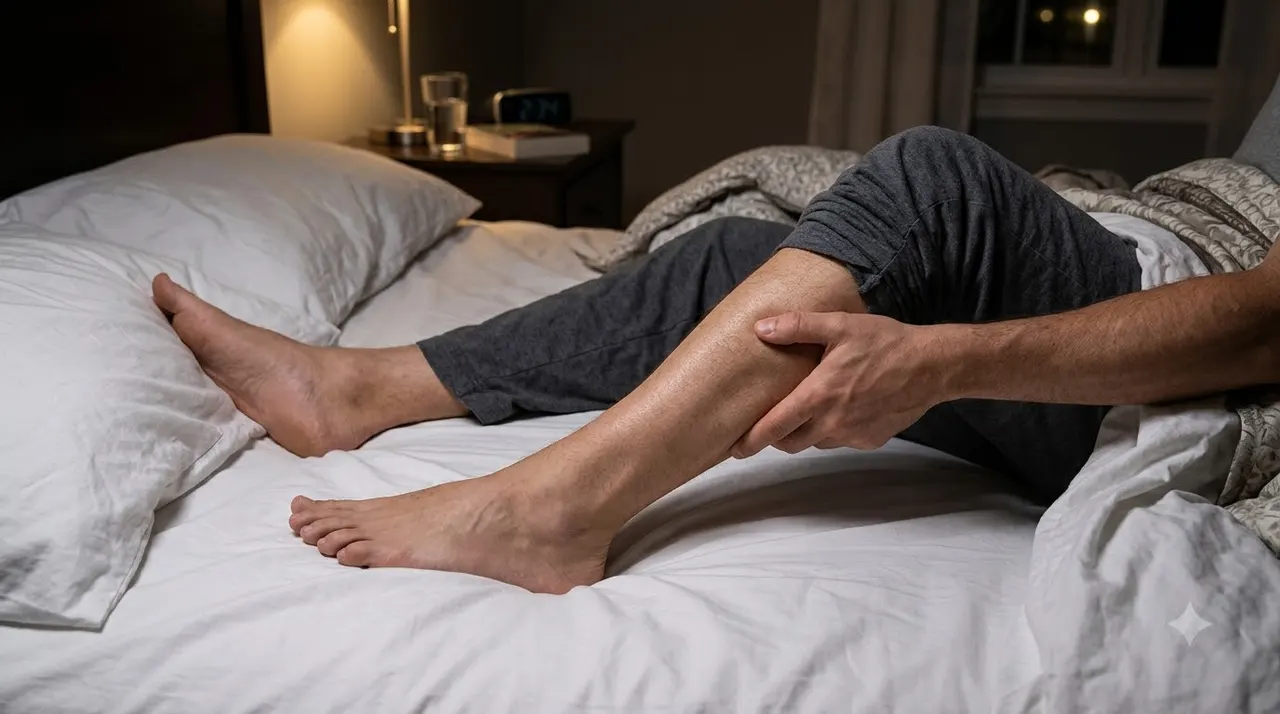
Throbbing or Cramping
Occasional throbbing, cramping or restless sensations in the legs — particularly at night — associated with the underlying venous pressure driving spider vein formation.
Skin Sensitivity
The skin directly over and around the veins may feel tender to the touch or sensitive — particularly over clusters on the inner thigh or ankle.
Why Spider Veins Develop
Family History
The strongest predictor. If one or both parents have spider veins, your risk is significantly elevated — vein wall weakness is largely inherited.
Pregnancy
Increased blood volume, hormonal changes and uterine pressure on pelvic veins during pregnancy frequently trigger or worsen spider veins.
Prolonged Standing
Jobs requiring long periods on your feet — nurses, teachers, retail workers — increase venous pressure and accelerate spider vein formation over time.
Sun Exposure
Prolonged or repeated sun exposure — particularly on the face — weakens skin and vessel walls, contributing to spider veins on the cheeks and nose.
Age
Vein walls and valves naturally weaken with age. Spider veins become more prevalent in both men and women over the age of 40.
Hormonal Changes
Hormonal shifts during puberty, pregnancy, perimenopause or hormone therapy can weaken vein walls — explaining the higher prevalence in women.
Venous Reflux
Underlying incompetence in the great or small saphenous vein creates backpressure that feeds spider vein clusters at the surface — a duplex ultrasound identifies this.
Obesity
Excess weight increases pressure on leg veins and accelerates the development of both spider veins and varicose veins over time.
What to Expect
Assess & ultrasound
Provider assesses your veins and checks for underlying venous reflux with a duplex ultrasound.
Personalised approach
Sclerotherapy, laser ablation or a combination is recommended based on the size, depth and location of your veins.
15–45 minutes in-office
Treatment performed in-office in 15–45 minutes depending on approach — no hospital, no surgery.
Walk out same day
Walk out the same day. Compression stockings for 1–2 weeks after sclerotherapy; minimal aftercare after laser.
Veins fade over weeks
Veins fade over several weeks. Additional sessions clear remaining veins until the desired result is achieved.
How We Treat Spider Veins
Two proven in-office options — the right choice depends on the size, depth and location of your veins. Available across all AMG locations.
Sclerotherapy
The most effective and widely used treatment for spider veins on the legs. Polidocanol (Asclera) is injected directly into each vein, collapsing it from the inside. The vein fades gradually over 3–6 weeks. 1–3 sessions for complete clearance. 30–45 minutes. Walk out same day.
Laser Ablation
Focused laser energy delivered through the skin collapses very fine spider veins and facial vessels — no needles, no injections. Ideal for patients who prefer a needle-free approach or for very fine veins on the face that are not suitable for injection. 15–30 minutes. Walk out immediately.
Sclerotherapy vs Laser Ablation
Your provider will recommend the best option at your consultation — or a combination of both for optimal results.
Frequently Asked Questions
Spider veins themselves are not dangerous, but they can indicate underlying venous reflux that may progress to varicose veins or Chronic Venous Insufficiency (CVI) over time. An in-office evaluation determines whether treatment of the underlying cause is needed.
Sclerotherapy is the gold standard for spider veins on the legs and covers more area per session. Laser ablation is preferred for very fine veins, facial vessels and needle-averse patients. Your provider recommends the best option at your consultation — often a combination of both.
Treated veins are permanently eliminated — they do not return. However, new spider veins can develop over time, particularly in patients with a genetic predisposition or ongoing risk factors such as prolonged standing or hormonal changes.
Most patients achieve satisfactory clearance in 1–3 sessions spaced 4–6 weeks apart. The number depends on the extent, density and location of the veins being treated.
Spider vein treatment is generally considered cosmetic and not covered by insurance. However, if an underlying venous condition such as venous reflux or CVI is identified, related treatment may be covered. Our team verifies coverage before your visit at no cost.
Yes — we provide care in English and Spanish at all locations. Se habla español.
Ready to take the next step?
Schedule a consultation at our North Bergen Vascular Procedure Center. Same-day appointments available.